

About Tantrika
Start Living As Your Authentic Self.
Master the Way of Advaya Tantra.
Tantrika invites you to realize the urgent relevance of spiritual enlightenment for today’s world—recognizing that awakening to our Prior Unity is the only real solution to all division, and the liberating basis for a life of meaningful, creative, joyful participation.
Our mission is to empower individuals worldwide to actualize the ancient ideal of the Tantrika: life-positive mystics, yogis, and bodhisattvas who naturally embody the nonduality of spirit and form, being and becoming, innocence and experience. Grounded in the radiant Great Perfection of the Kosmos*—free from the ego’s sense of lack and separation—they imbue their lives, work, and relationships with playful creativity, awakened presence, and boundless love. For Tantrikas, inner transformation and outer expression are two halves of one whole. And nothing makes them feel more fully alive than becoming ever-brighter examples of the wiser, kinder humanity our hearts know is possible.

About the Teacher
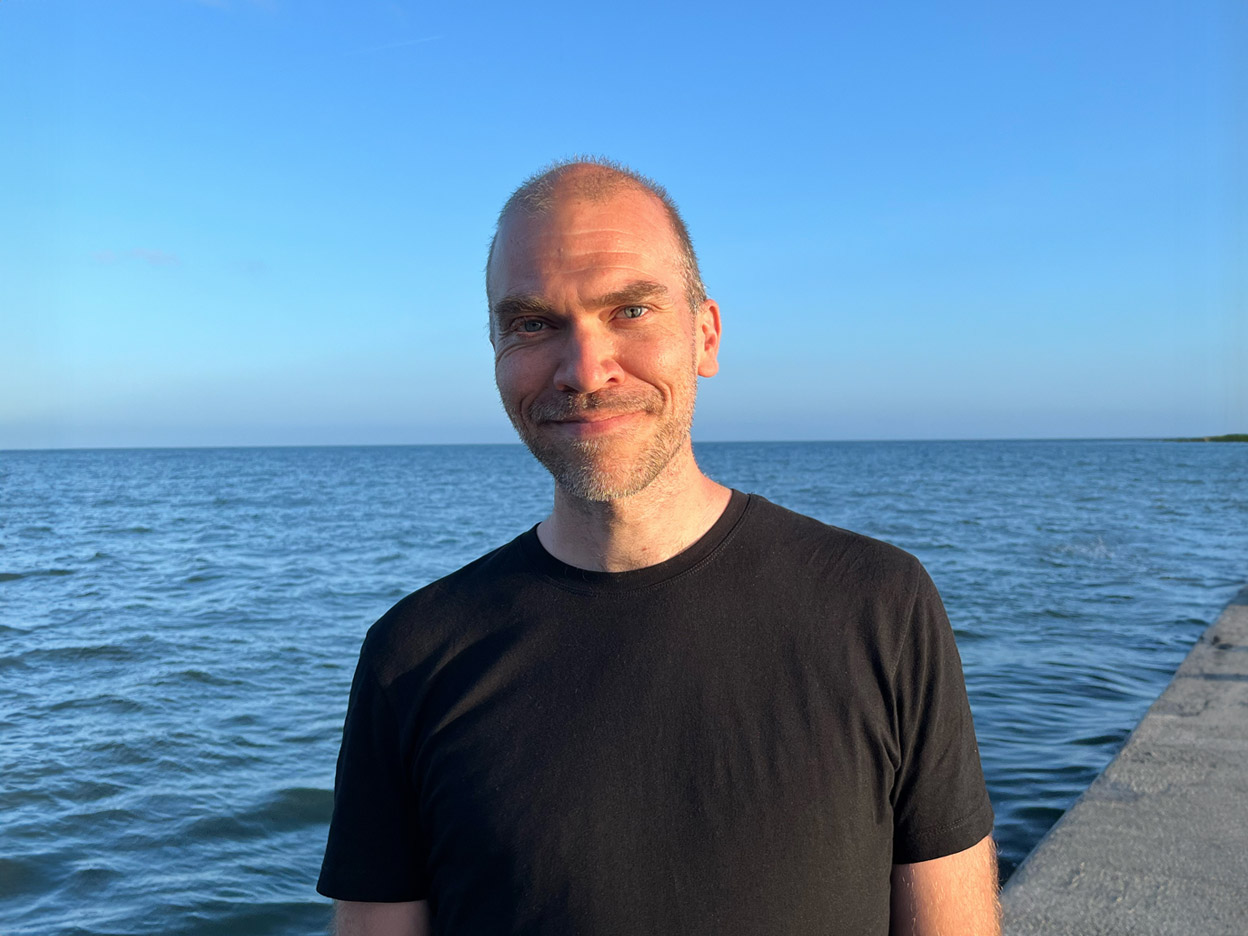
Tom Huston
Tom is a writer, father, and Tāntrika. Over the past three decades, he has trained on a spiritual path he now calls Advaya Tantra—a contemporary expression of the ancient, world-embracing way of tantric mysticism.
Growing up in California, his passion for exploring the nature of reality was evident from an early age, and by the time he was a teen, he was creating tantric visualization scripts and teaching himself to meditate. After his mind was blown by a series of revelatory lucid dreams, he spent years diving into Dream Yoga as his primary practice. Later, at 19, while practicing Zen meditation and studying the teachings of the American guru Adi Da Samraj, he was personally sought out by the renowned integral philosopher Ken Wilber, who had read some of Tom’s writings online. Wilber invited Tom to become a founding member of his multidisciplinary think tank, Integral Institute.
Tom’s fate was sealed in 1998, however, when he discovered the work of Andrew Cohen, who taught a modern system of Nondual (Advaya) Tantra, which he later named Evolutionary Enlightenment. In 2000, with Wilber’s encouragement, Tom became a dedicated student and subsequently practiced, 24/7, as a formal monastic disciple at Cohen’s main EnlightenNext āshram in the Berkshire Hills of Western Massachusetts. There, amid countless hours of meditation, chanting, prostrations, guru yoga, and other intensive forms of tantric sādhanā, Tom joined his sangha peers in pioneering experimental group practices to invoke a shared enlightened state, which Cohen called Intersubjective Nonduality. These collective awakened states consumed everyone, sometimes for weeks, in an ecstatic inferno of what the great integral yogi Sri Aurobindo had termed the vertical descent of the Supermind.
For years, Tom practiced these communal arts in weekly student meetings and, especially, in his daily work with Cohen and other colleagues as an editor of the quarterly, Folio Award–winning magazine What Is Enlightenment? (aka EnlightenNext). With each foray into what felt like the next stage of human potential, Tom added new notes to his ever-developing synthesis of Integral Philosophy and Evolutionary Enlightenment, producing a volume of text that eventually numbered in the thousands of pages. This metaphysical fusion would later inform his unique articulation of Advaya Tantra.
After the sangha unexpectedly disbanded in 2013, EnlightenNext’s grand experiment in collective awakening continued to inspire Tom in his next phase of spiritual growth: a quest to deepen and sustain his own individual realization. Plunging into years of shadow work, Internal Family Systems (IFS) parts work, and other deep-healing modalities, he strove to forge a greater depth of embodied integration. To bolster his post-traditional, “metamodern” mystical training, he also engaged anew with adepts from traditional religious systems—particularly Trika Shaivism (Hindu Tantra), Tibetan Dzogchen and Mahāmudrā (Buddhist Tantra), Zen Buddhism, and scriptural Advaita Vedānta—while continuing to deepen his Advaya Tantra practice and view.
Tom now resides in London with his wife and spiritual peer, Lovena, and their radiant young daughter. Committed to a life of boundless freedom, joy, and creativity, he aspires to share his understanding with as many sentient beings throughout the Kosmos as he can.
The Transmission of Light
For thousands of years, the method of direct spiritual transmission from teacher to student has been foundational to the practice of mystical traditions, East and West. As a disciple of Andrew Cohen, Tom is grateful to stand in the guru-paramparā, or lineage, of the peerless Tamil sage Bhagavān Śrī Ramana Maharṣi, who taught the core Truth at the heart of all of humanity’s great religious traditions.
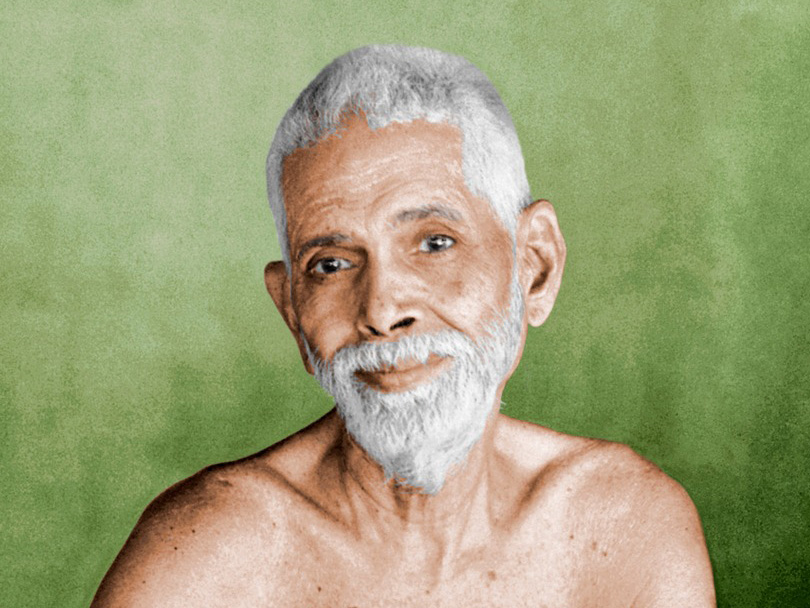
Sri Ramana Maharshi
Śrī Ramana (1879–1950) was a modern Indian buddha whose nondual realization transcended the traditional boundaries of Vedānta, Yoga, and Tantra. Instructing seekers to profoundly inquire “Who Am I?,” he led many to recognize the ever-present freedom of the Heart. His deep simplicity, kindness, and oceanic peace carried a living transmission of the Divine that continues to awaken souls today.
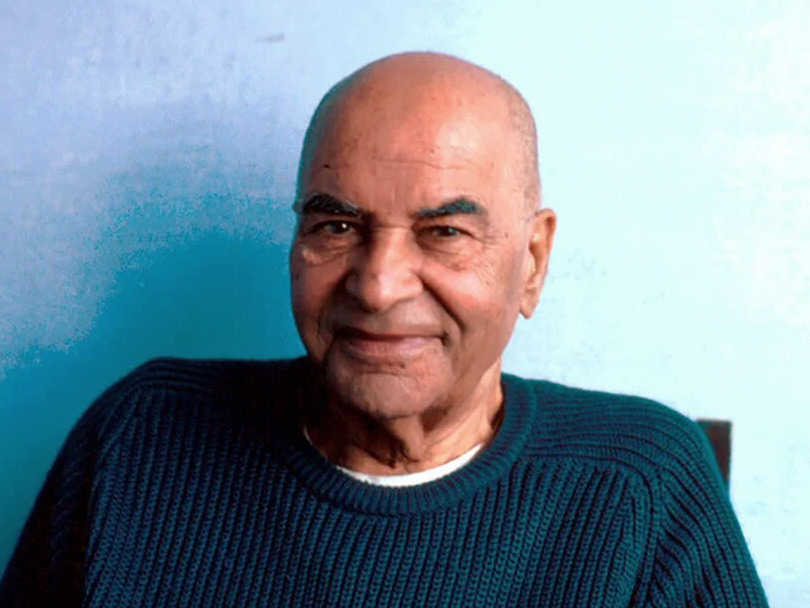
H.W.L. Poonja (Papaji)
Papaji (1910–1997) was an Indian teacher of Advaita Vedānta and a direct disciple of Ramana Maharshi. Renowned for his bold personality and humorous teaching style, he introduced seekers worldwide to the immediacy of nonduality through his power of tantric transmission, or śaktipāta siddhi. He advocated a Zen-like approach to Hinduism’s 5,000-year-old teachings that some call Radical Advaita.
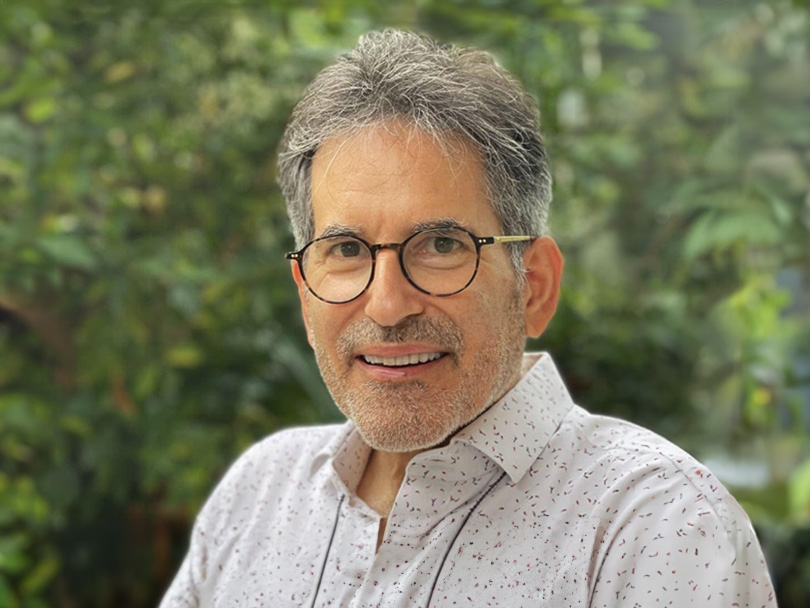
Andrew Cohen
Andrew (1955–2025) was an American enlightened master, disciple of H.W.L. Poonja, and pioneer in the field of Integral Spirituality. From 1986-2013, he led his EnlightenNext community in centers worldwide, and later directed his Manifest Nirvana sangha from India. His innovative, tantric teachings emphasized the power of individual awakening to effect humanity’s greater collective evolution.
Pioneers of Advaya Tantra
Across the great mystical traditions of India and Tibet, fully enlightened adepts called Mahāsiddhas profoundly realized and dynamically incarnated the deepest truth of Nondual Tantra: the unity of Consciousness and Energy, Emptiness and Form, Being and Becoming. Their revelations form the living foundation of what we call Advaya Tantra—a universal, integral, life-positive path of embodied awakening and creative expression. The three ascended masters below, among others, continue to illuminate the Way for spiritual seekers in our metamodern age.
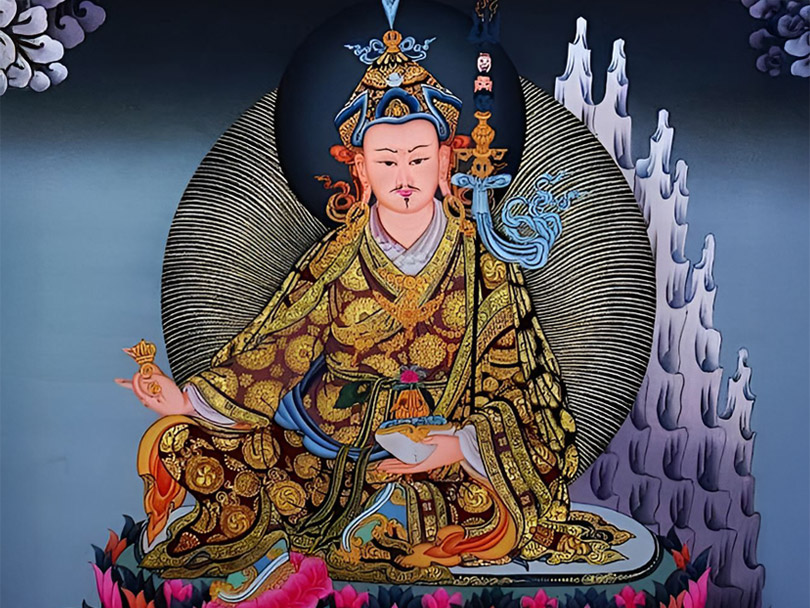
Padmasambhava
Padmasambhava (c. 8th century), revered as Guru Rinpoche, was the seminal tantric mahāsiddha whose arrival in Tibet helped establish the Nyingma order of Vajrayāna Buddhism. Renowned for his yogic powers and ability to awaken beings to the pristine nature of Consciousness Itself, he is said to have manifested the immortal Rainbow Body, dissolving his physical form into light and appearing wherever he was needed.
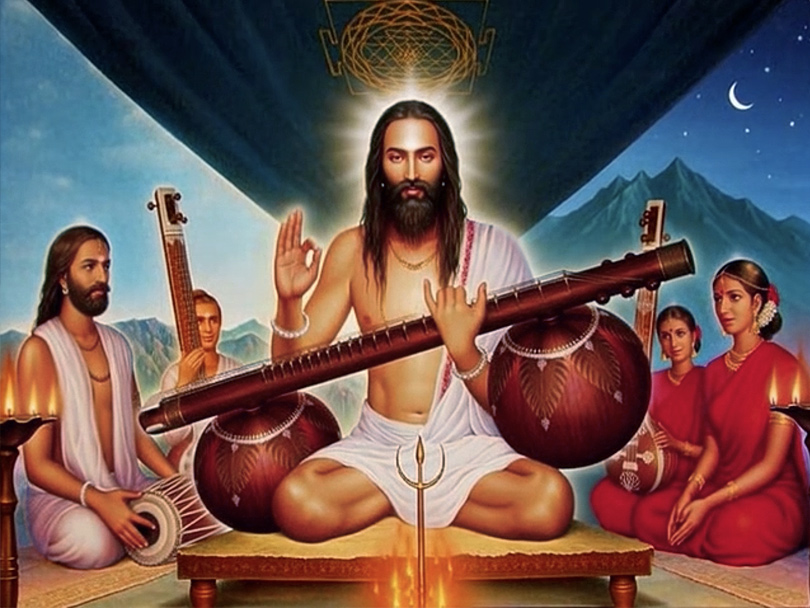
Abhinavagupta
Abhinavagupta (c. 975–1025) was a writer, polymath, and great tantric adept of Trika Shaivism from Kashmir, whose integral philosophy was a millennium ahead of its time. Through works such as Tantrāloka, he synthesized the many ancient lineages of Śaiva and Śākta Tantra into a holistic, comprehensive vision of reality as the dynamic play of One Consciousness and its infinitely creative power.
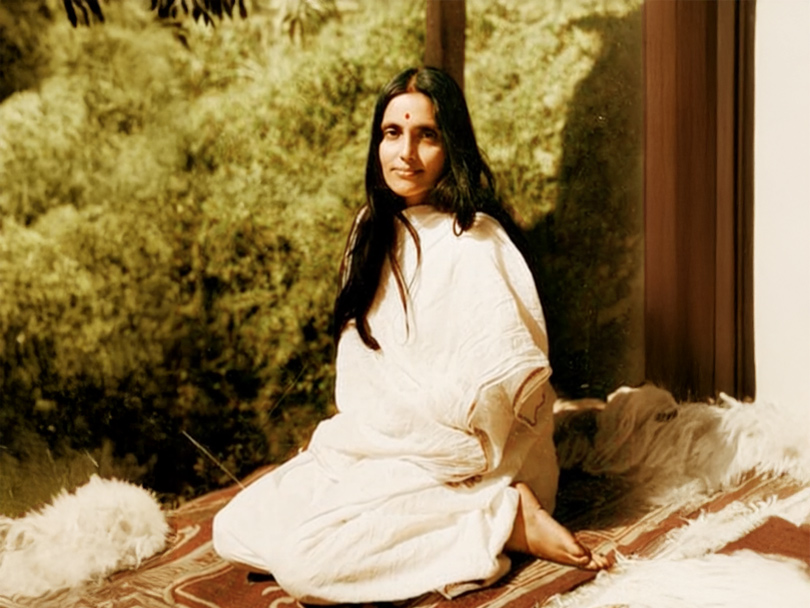
Anandamayi Ma
Śrī Ānandamayi Mā (1896–1982) was a modern Indian avatāra, born enlightened, whose life epitomized the effortless grace of Self-realization. Deeply tantric in her embrace of the totality of life as sacred, the purity of her presence conveyed the motherly love, warmth, and bliss of the Divine, transcending sectarian boundaries. Her radically nondual dharma taught that all of existence is nothing but God.
Heralds of an Integral Future
Over the past century, a few leading visionaries expanded upon the perennial insight recognized by mystics like Abhinavagupta in the East and Plotinus in the West: that reality is a living continuum of one infinite Source expressing itself as all finite forms. Known as Integral Spirituality, their work articulated this ancient wisdom in a language the modern world could understand. Together, their contributions have laid meaningful groundwork for the contemporary emergence of Advaya Tantra as a planetary path of embodied awakening and creative, evolutionary participation.
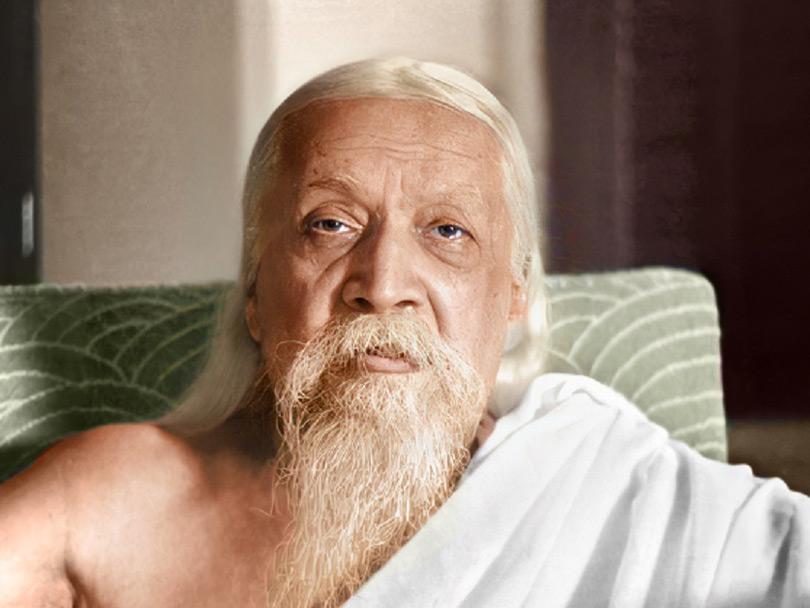
Sri Aurobindo
Śrī Aurobindo (1872-1950) was an Indian philosopher, political activist, and tāntrik yogi. He created the system of Integral Yoga, teaching that anyone’s profound spiritual integration can help usher in a more sacred world. His writings, including The Life Divine, continue to inspire many to pursue the nonduality of spiritual and material evolution by aligning their souls with the universal evolutionary impulse of Shakti, or the Consciousness-Force.
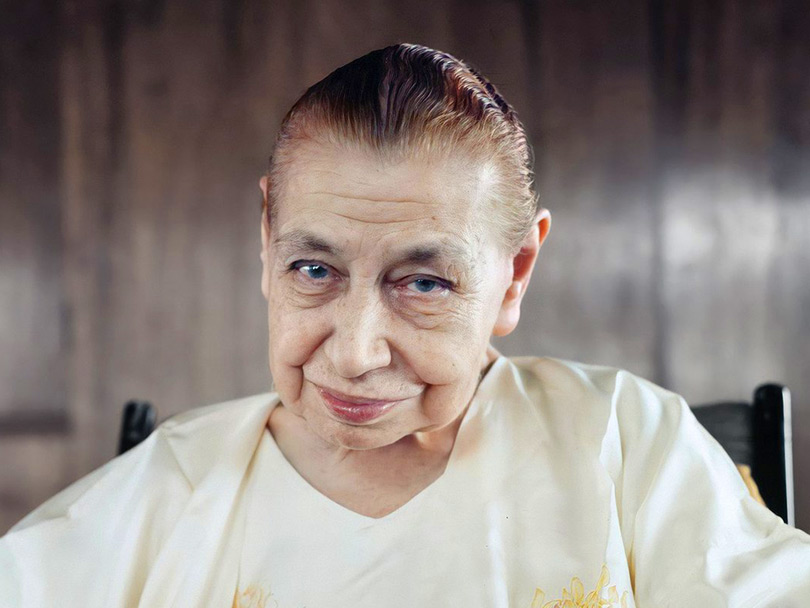
The Mother
The Mother (1878-1973), born Mirra Alfassa, was a French practitioner of Western esoteric mysticism who became, in India, the spiritual collaborator of Sri Aurobindo. Cofounder of the Sri Aurobindo Ashram, she worked to manifest the principles of Integral Yoga in everyday life and founded Auroville, an experimental township for human unity. Through her efforts, she has led countless seekers to pursue the fullness of integral awakening.
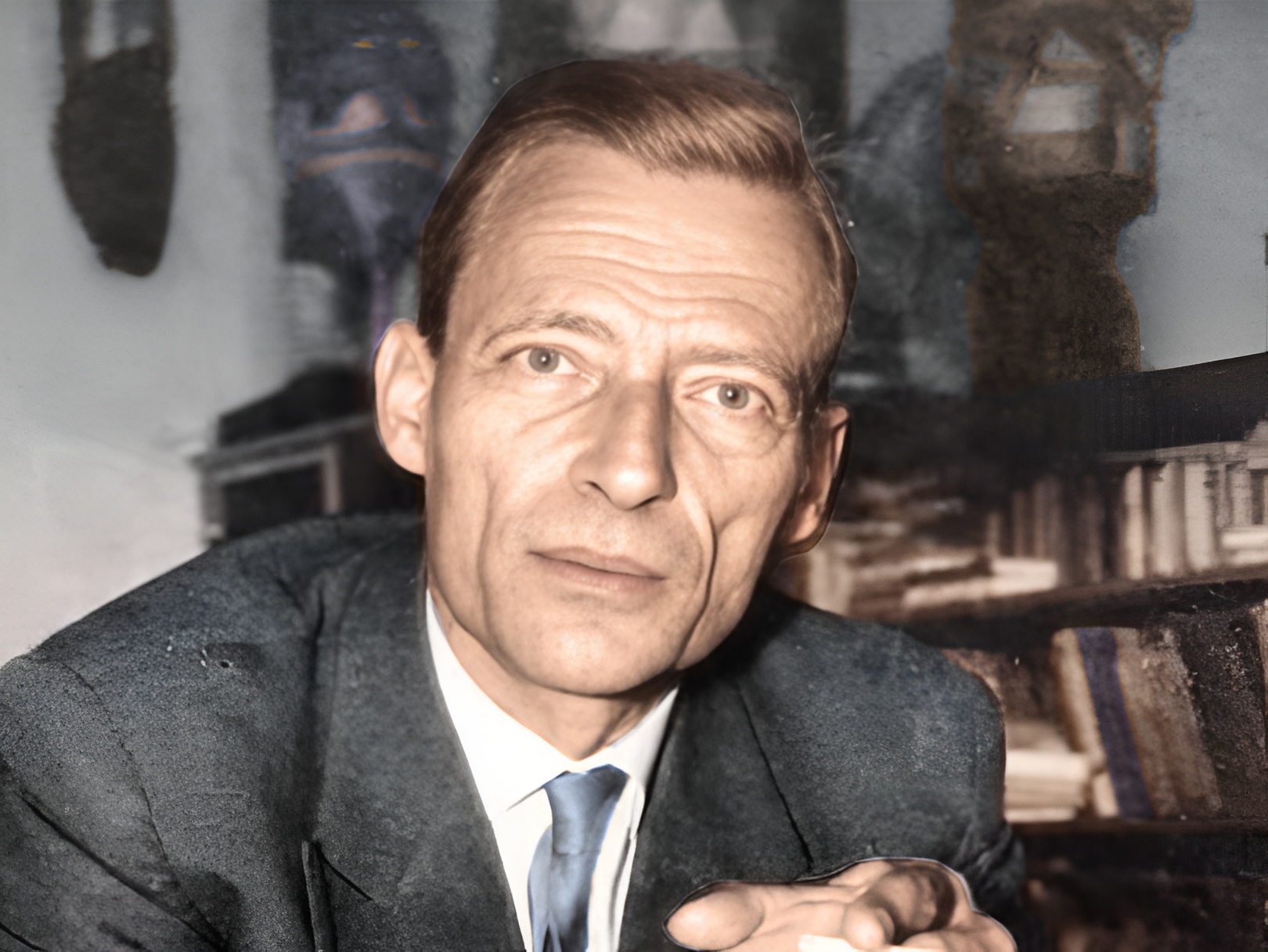
Jean Gebser
Jean Gebser (1905–1973) was a German-Swiss anthropological philosopher and spiritual thinker, best known for his masterpiece, The Ever-Present Origin. His pioneering work chronicled the nonlinear mutations of consciousness and culture over the course of known history, and pointed toward the emergence of an integral awareness in which human meaning, perception, and culture become increasingly transparent to the timeless Origin of all phenomena.
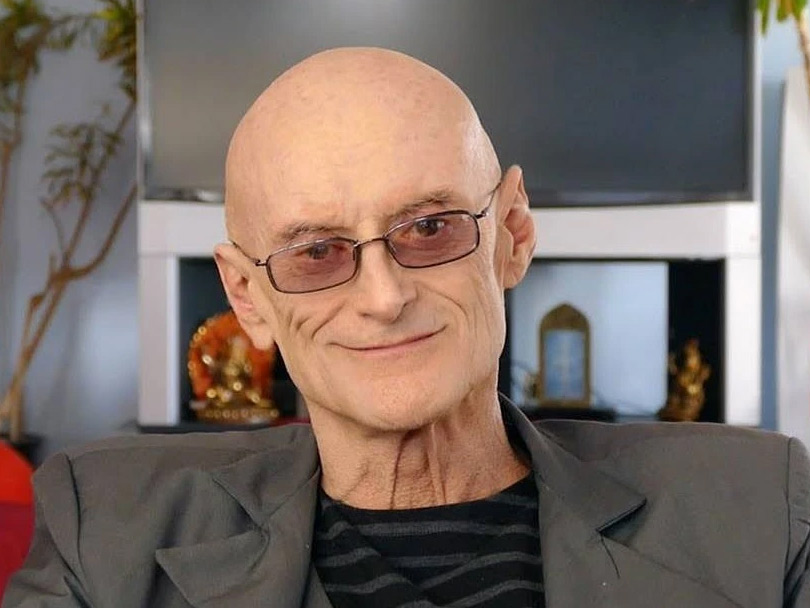
Ken Wilber
Ken (b. 1949) is an American philosopher and mystic, known for his revolutionary Integral Theory. His inclusive, integrative approach unites spirituality, science, the arts, politics, philosophy, and psychology—providing an innovative framework for making sense of everything. A highly influential author, he also founded Integral Institute and Integral Life to share the relevance of his integral vision with the wider global culture.
Other Influential Teachers
While the teachers and teachings that have exerted a lasting influence on Tom are too extensive to list here, the individuals below represent just a few of the many recent and contemporary figures who continue to inform his perspective.

Adi Da Samraj
American Mahāguru

Tulku Urgyen Rinpoche
Vajrayāna Tāntrika

Lama Lena (Yeshe Kaytup)
Vajrayāna Tāntrika

Tenzin Wangyal Rinpoche
Bön Tāntrika

Dr. Nida Chenagtsang
Vajrayāna Tāntrika

Chökyi Nyima Rinpoche
Vajrayāna Tāntrika

James Low
Vajrayāna Tāntrika

Jeff Shore
Rinzai Zen Master

Anzan Hoshin Roshi
Soto Zen Master

Jane Roberts
Author & Seth Channeler

Mark Dyczkowski
Trika Śaiva Pandit and Tāntrika

Swami Dayananda Saraswati
Advaita Vedānta Guru

Sthaneshwar Timalsina
Śaiva-Śākta Tāntrika

Vimala Thakar
Enlightened Social Activist

Lorraine Flaherty
Integrative Hypnotherapist

Guo Gu
Línjì & Cáodòng Chán Master

Michael Newton
Clinical Psychologist

Shambhavi Sarasvati
Trika Śaiva & Dzogchen Tāntrika

Neville Goddard
New Thought Mystic

Isabelle Ratié
Scholar of Shaivism & Buddhism
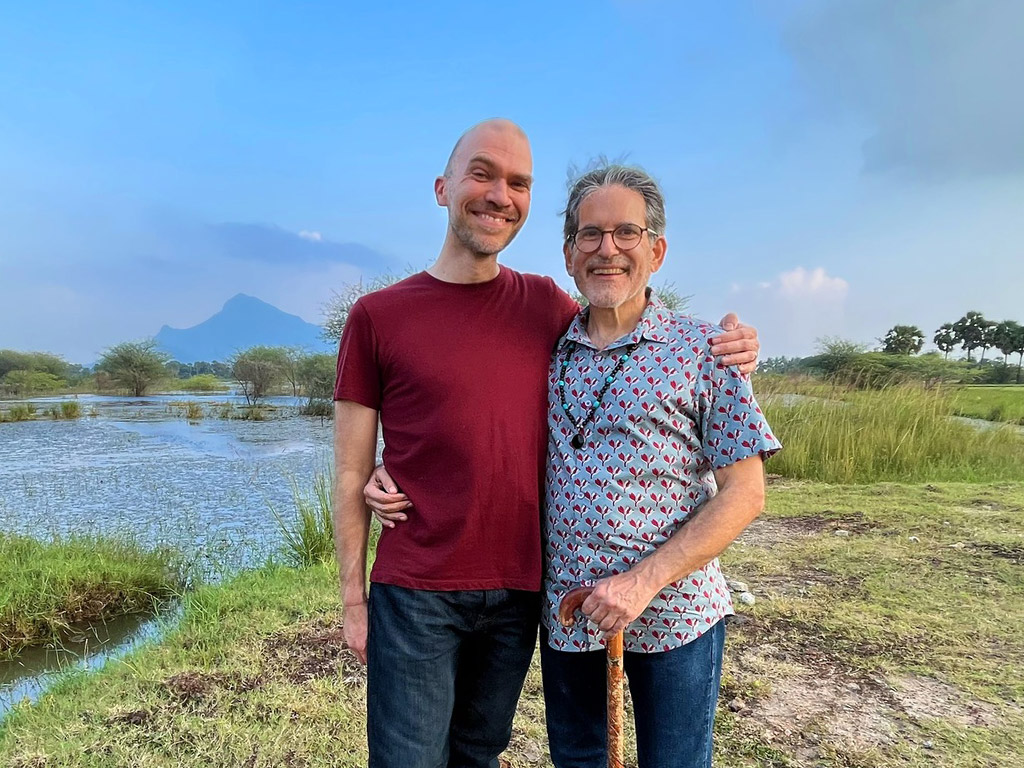
Tom with his root guru, Andrew Cohen, in Tiruvannamalai, India, December 2023, on the plains below the sacred Arunachala Hill.
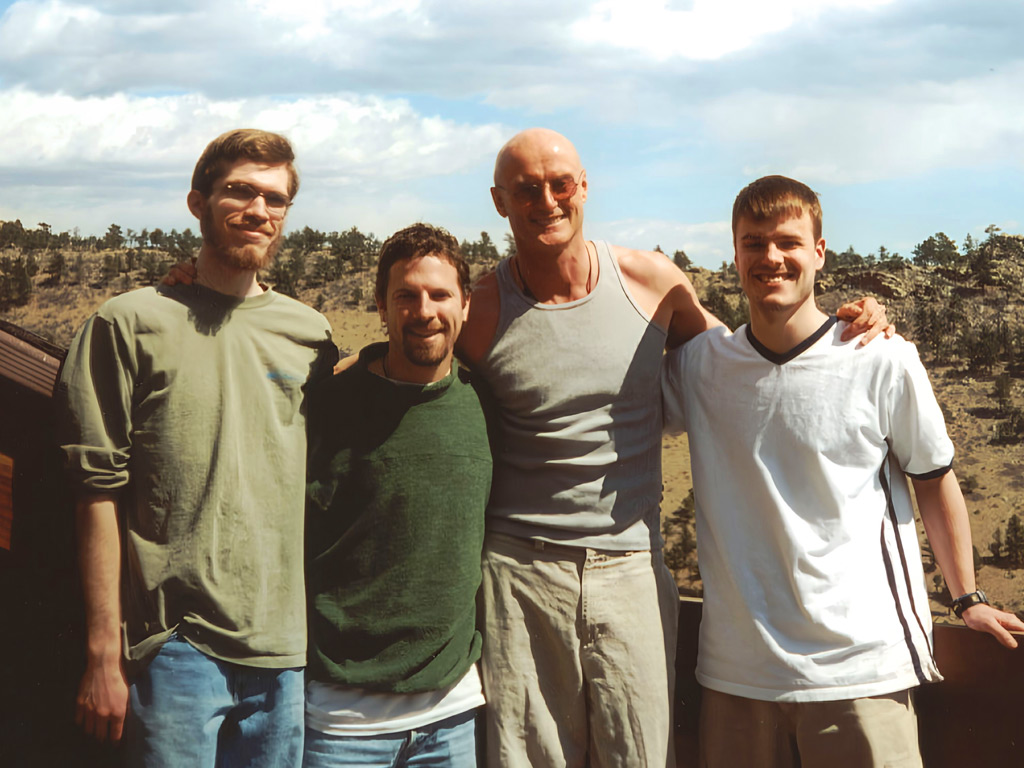
Tom, Sean Esbjörn-Hargens, Ken Wilber, and Allan Breedlove at an Integral Institute meeting in Boulder, Colorado, March 2000.
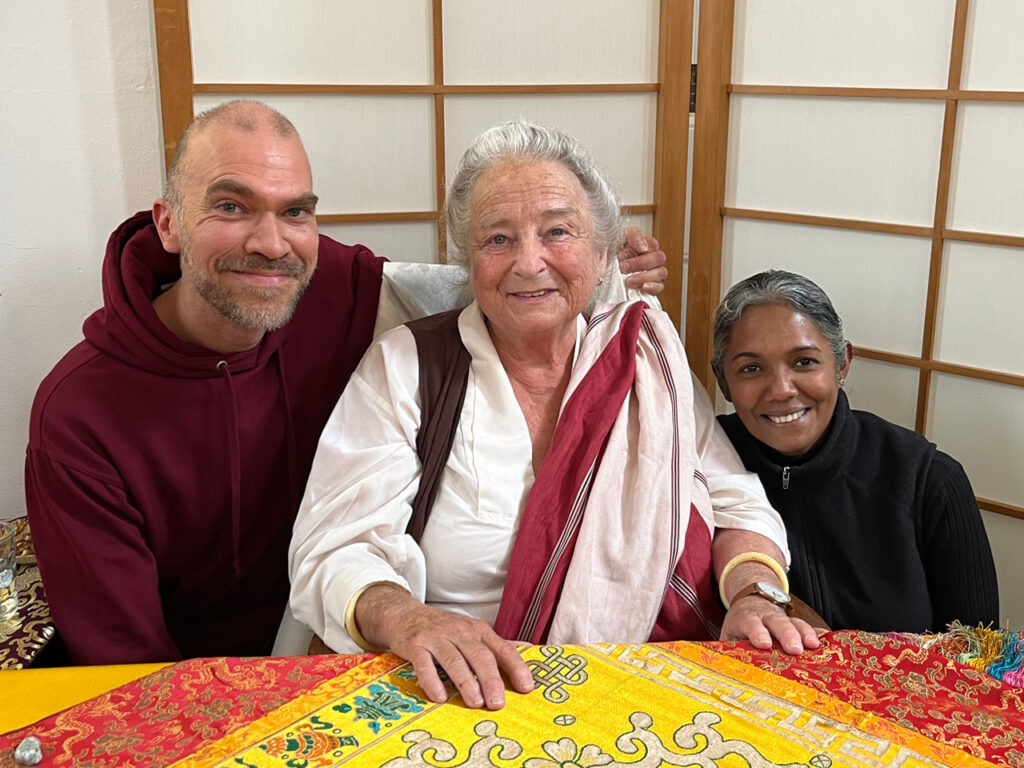
Tom and his wife, Lovena, with Lama Lena Yeshe Kaytup—Rimé (Nyingma and Sarma) Dzogchen and Mahāmudrā master.
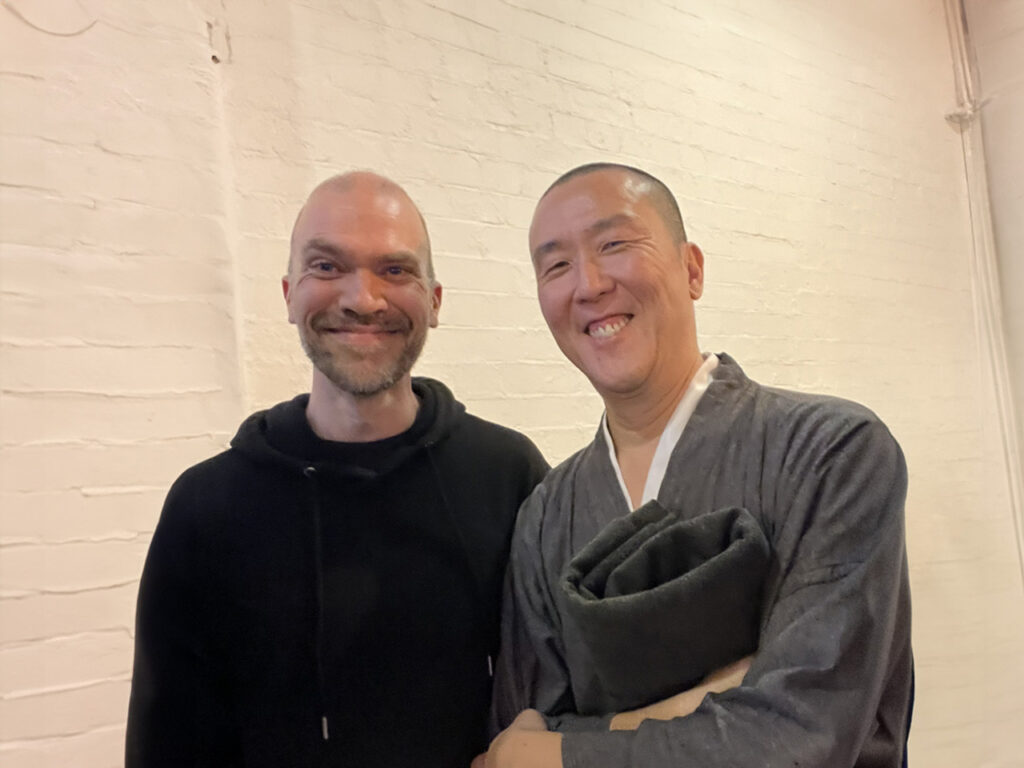
Tom with Guo Gu Lǎoshī—University professor, author, and Chán (Zen) master in the Línjì & Cáodòng lineages of Dharma Drum.
Glossary of Integral Terms
What is Tantra? And why do we spell Kosmos with a “K”?
Advaya
adjective
\ˌəd-ˈvī-yə\
1. A Sanskrit term meaning nondual, not-two, or beyond the polarities—pointing to the true, indivisible nature of Reality in which apparent opposites such as Awareness and Experience, Emptiness and Form, or Being and Becoming are known as one seamless whole.
2. Describing a state, realization, or enlightened view that recognizes all phenomena as expressions of a single, all-pervading Awareness—free of division, conflict, or dualistic grasping.
3. Referring to any path, practice, or wisdom tradition that reveals this oneness directly, awakening individuals to the Prior Unity at the heart of existence.
Tantra
noun
\ˈtän-trə\
1. From the Sanskrit roots √tan (“to expand, unfold, make known”) and √tra (“to protect, liberate”), referring to esoteric paths, texts, or methods that expand insight into the nature of reality and liberate the practitioner from suffering.
2. A family of esoteric traditions found especially in Hindu and Buddhist lineages that transmit methods of awakening through initiation, ritual, mantra, visualization, deification, magick, yoga, meditation, and experiential inquiry.
3. A holistic, life-affirming spiritual approach that treats the body, breath, mind, senses, emotions, relationships, nature, and universe as sacred gateways to awakening—revealing liberation not apart from the world but through it.
Tantrika
noun
\ˈtan-tri-kə\
1. One who walks the path of Tantra, integrating awakening and embodiment as a single movement of life, and honoring the sacred unity underlying all apparently diverse, separate, and distinct phenomena.
2. A practitioner who engages reality as a dynamic, sacred play of Divinity, using inquiry, meditation, yoga, and the arena of everyday life to realize and express their Authentic Self.
3. An individual who meets every possible circumstance as part of the path—transforming body, speech, and mind into ever more refined and liberated vehicles of Spirit for the benefit of all sentient beings.
Dharma
noun
\ˈdär-mə\
1. A Sanskrit term meaning the intrinsic order of the universe, as well as the spiritual duty, moral purpose, or rightful action that aligns an individual or society with that order.
2. The truth of things as they are—both in their provisional, ever-evolving forms (relative truth) and in their ultimate nature, or eternally immutable essence (absolute truth).
3. The enlightening teachings, or spiritual way, that reveal these truths and awaken beings to nirvana—the realization that one is a complete and ever-evolving expression of the Infinite Awareness that is Buddha-Nature, or God.
Kosmos
noun
\ˈkäz-ˌmōs\
1. An Ancient Greek term meaning an “orderly arrangement” or “ornament,” but traditionally used by philosophers to denote the universe, or entire multiverse, as an intelligently formed, harmonious, naturally self-optimizing system.
2. The holistic, integral, multidimensional totality of Reality, or All That Is, spanning gross materiality to subtler planes to transcendent spiritual realms (as distinct from the modern materialist notion of the physical “cosmos” alone).
Integral
adjective
\ˈin-tə-grəl\
1. Forming an essential or complete whole; comprehensive, unified, and undivided.
2. Holistic or inclusive, emphasizing the interconnectedness and integration of multiple perspectives, dimensions, or systems.
3. Denoting an expanded mode of consciousness that transcends earlier modes, while including and preserving their core capacities.
Samsara
noun
\ sam-ˈsär-ə\
1. A Sanskrit term meaning “that which goes on and on,” referring to the conditioned cycle of evolutionary becoming while it remains shaped by a sense of separation, limited identification, and the persistent desire for fulfillment.
2. The developmental phase of a soul’s existence in which it evolves through experience while still perceiving itself, through ignorance, as distinct from its source—seeking wholeness and completion from within the illusion of lack.
3. The “egoic” culture collectively co-created by souls engaged in this phase of evolutionary growth, characterized by reification of the belief in separation, and resulting in shared karmic agreements that perpetuate struggle and dis-ease.
Nirvana
noun
\ nir-ˈvä-nə, -ˈva-\
1. A Sanskrit term meaning “blowing out” or “extinguishing” (as of a flame), referring to the cessation of the phase of evolutionary becoming that is fueled by craving, ignorance, and the belief that one is an isolated and separate self.
2. The profound realization of oneness with the Absolute, an awakening that relaxes the soul into its true nature as Mahāmudrā—a transparent gesture of Ultimate Reality—liberating spontaneous creativity, constant compassion, and the capacity to grow ever brighter as a buddha: an evolutionary attractor for all.
3. The enlightened culture, or “third-tier” Supramental utopia, that can emerge spontaneously between a collective of spiritually enlightened Tantrikas.

Walt Whitman
American Tantrika
“The poets of the kosmos advance through all interpositions and coverings and turmoils and stratagems to first principles.”
See Our Current Course Offerings
Tantrika offers multi-week group coaching programs in meditation and the path of Advaya Tantra, hosted online through live Zoom sessions.